Skip links

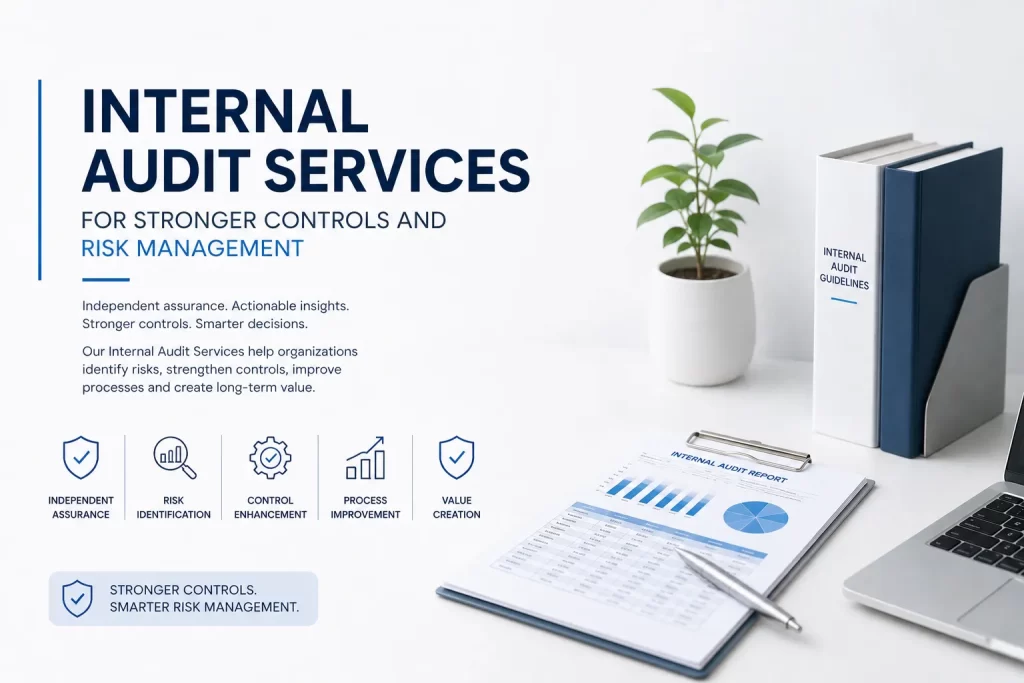
Internal Audit Services

for Stronger Controls and Risk Management

Effective internal controls are essential for businesses that want better visibility over financial, operational and compliance risks.

Our internal audit services help businesses evaluate their control environment, identify gaps, assess risks and improve business processes through a structured and practical approach.

We review relevant financial controls, operational processes, compliance procedures, risk management practices and reporting systems to identify areas requiring action and recommend practical corrective actions.

Get a Consultation ›
Three professionals collaborating around a laptop in a modern office, representing financial expertise, teamwork, and business consulting at V Acc-comply.

What Are Internal Audit Services?

Internal audit services help businesses independently evaluate whether their internal controls, processes, risk management practices and governance mechanisms are working effectively.

An internal audit goes beyond checking financial information. It can examine how business processes operate, whether controls are appropriately designed, whether procedures are being followed and where operational, financial or compliance risks may exist.

Our approach focuses on understanding your business processes, identifying relevant risks, reviewing existing controls and communicating practical findings that management and process owners can act upon.

The objective is to help businesses strengthen internal controls, improve process effectiveness, manage risks and support stronger corporate governance.

Improve Internal Controls

Strengthen Control Effectiveness and Identify Gaps

Manage Business Risks

Identify key risks and strengthen risk management.

Enhance Governance

Support stronger governance and accountability.

Drive Process Improvement

Identify practical opportunities to strengthen processes and improve operational effectiveness.

Our Internal Audit Services

We help organisations evaluate their internal controls, risks and processes through a structured and objective internal audit approach that supports stronger governance and better decision-making.

01

Internal Control Review

We review key internal controls across relevant business functions to understand whether controls are appropriately designed and operating effectively.

The review may cover areas such as evaluating the design and implementation of Internal Controls, financial reporting controls, approval mechanisms, segregation of duties, documentation, reconciliations and other control activities relevant to the business.

The objective is to identify control gaps and areas where existing processes can be strengthened.
02

Risk Assessment and Audit Planning

A structured internal audit begins with understanding the risks relevant to the business.

We assess potential financial, operational and compliance risks and use the findings to establish an appropriate audit scope and audit plan.

A risk-focused approach helps direct attention towards processes and controls that may have greater significance for the organisation.

03

Financial and Operational Process Review

We review selected financial and operational processes to identify inefficiencies, control weaknesses, process gaps and areas requiring improvement.

Depending on the agreed scope, the review may cover processes such as procurement, sales, expenses, inventory, finance operations, reporting and other business activities.

04

Compliance and Governance Review

We evaluate relevant compliance controls and governance practices within the agreed audit scope.

This can include reviewing whether defined procedures, approval mechanisms, reporting practices and control responsibilities are appropriately documented and followed.

The review can also support stronger governance frameworks and management oversight.

05

Control Testing and Audit Procedures

Our internal audit approach may involve sample-based testing, document review, process walkthroughs, discussions with process owners and examination of relevant records.

Control testing helps determine whether identified controls are operating as intended and whether exceptions or weaknesses require management attention.

06

Audit Findings and Corrective Action Support

We communicate identified observations and findings in a structured manner, highlighting the relevant control or process issue and its potential business impact.

Where appropriate, we provide practical recommendations and support the development of corrective actions that process owners can use to address identified gaps.

Our Internal Audit Process

01

Initial Consultation

02

Requirement & Risk Assessment

03

Audit Planning & Scope Definition

04

Data & Document Review

05

Control Testing & Analysis

06

Reporting & Follow-Up

01

Initial Consultation

We begin by understanding the business, its objectives, existing processes and the purpose of the internal audit engagement.

02

Requirement and Risk Assessment

We identify relevant business risks, control areas and processes to be considered within the audit scope.

We map the controls using a risk-control matrix to assess the type of risk, its potential impact and likelihood of occurrence.

We also evaluate the design and effectiveness of the controls implemented to mitigate the identified risks.

03

Audit Planning and Scope Definition

Based on the requirements and risk assessment, we establish the audit scope, procedures and areas for review.

04

Data and Document Review

Relevant records, process documents, financial information, policies and supporting documentation are reviewed based on the agreed scope.

05

Control Testing and Analysis

We perform relevant audit procedures and control testing to identify observations, exceptions, control gaps and process improvement opportunities.

06

Reporting and Follow-Up

The audit findings are communicated through an appropriate audit report or review output, along with recommendations and corrective action plans, where applicable.

These recommendations and corrective actions help process owners effectively address and mitigate the identified risks.

Who Can Benefit From Internal Audit Services?

Internal audit services can be relevant to businesses that want greater visibility over their internal controls, risks and business processes.

✓

Growing businesses establishing stronger internal control frameworks

✓

Companies reviewing existing financial and operational controls

✓

Businesses undergoing process changes or organisational growth

✓

Companies seeking structured risk assessment

✓

Organisations looking to strengthen governance and compliance controls

✓

Businesses that require independent review of selected processes

✓

Organisations seeking to identify operational and financial control gaps

Areas We Cover

Depending on the agreed audit scope, our internal audit review may cover:

01

Internal Controls

Review of control design and effectiveness.

02

Risk Management

Identification and assessment of relevant business risks.

03

Financial Reporting Controls

Review of controls supporting financial information and reporting.

04

Operational Processes

Assessment of selected business processes for control and efficiency gaps.

05

Compliance Controls

Review of relevant compliance procedures and control mechanisms.

06

Corporate Governance

Review of governance-related processes within the defined scope.

07

Control Environment

Assessment of responsibilities, procedures and control practices.

08

Process Improvement

Identification of practical opportunities to strengthen processes.

09

Risk and Control Matrix

Where applicable, documentation of relevant risks and corresponding controls.

10

ICFR

Review of applicable internal controls over financial reporting.

Audit Scope: The exact areas covered depend on the organisation's requirements and the agreed audit scope.

Industries we Serve

Our internal audit services can be relevent across multiple industries and business environments .

Banking and financial services industry icon
Insurance industry shield icon
NBFC financial services icon
Manufacturing industry factory icon
Healthcare industry medical cross icon
Pharmaceutical industry medicine icon
IT industry technology computer icon
Retail industry shopping bag icon
Logistics industry delivery truck icon
Real estate industry building icon
Hospitality industry hotel service icon
Education industry graduation cap icon
Automotive industry car icon
FMCG industry shopping cart icon
Telecommunications industry network tower icon
Energy industry power icon
Infrastructure industry bridge icon
Professional services business icon

What You Receive

Depending on the engagement scope, the internal audit engagement may provide:

Internal audit observations

Defined Risk Control Metrics

Control review results

Risk assessment outputs

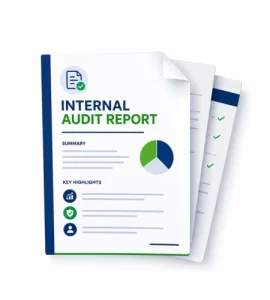
Audit reports

Documentation of identified control gaps

Practical recommendations

Subject Matter Experts Opinion on How to Address the Risk

Follow-up review observations, where applicable

Benefits of Internal Audit Services

A structured internal audit can help businesses gain greater visibility into their processes, controls and risks.
Key benefits may include:

Improved Internal Controls

Identify weaknesses in existing controls and areas where control effectiveness can be strengthened.

Better Risk Visibility

Understand financial, operational and compliance risks that may require management attention.

Stronger Governance

Support clearer accountability, control ownership and governance practices.

Improved Process Effectiveness

Identify process gaps, inefficiencies and opportunities for improvement.

Better Financial Reporting Controls

Review relevant controls supporting the accuracy and reliability of financial reporting.

Enhanced Accountability & Discipline in Your Organisation

More Insight into Your Business Operations.

Why Choose Our Internal Audit Services?

Businesses need an internal audit approach that is relevant to their operations rather than a generic checklist-based review. Our approach focuses on practical, risk-focused and business-relevant audit support.

Professional Expertise

Professional expertise in audit and control-related requirements.

Structured Audit Planning

Audit planning based on the agreed objectives and scope.

Risk-Focused Reviews

Identify relevant areas requiring attention through a risk-focused approach.

Practical Recommendations

Practical recommendations that can be considered by management and process owners.

Clear Documentation

Clear documentation of observations, findings and relevant audit outputs.

Compliance-Focused Assessment

Compliance-focused assessment where relevant to the engagement.

Timely Execution

Timely execution through a defined and structured audit process.

Solution-Oriented Methodology

A practical audit methodology focused on identifying issues and supporting workable solutions.

Industrial Experience

Industry experience that supports practical problem identification and solution-focused review.

We focus on providing clear findings and practical insights that businesses can use to strengthen their internal processes and controls.

Internal Audit Services in Chennai

Businesses looking for internal audit services in Chennai can work with our team to review relevant

financial, operational, compliance and control processes.

Our approach is designed around the organisation’s requirements and agreed audit scope

rather than applying the same review framework to every business.

Whether you require a review of selected processes, internal controls, risk areas or broader

governance practices, we can discuss your requirements and determine an appropriate

internal audit approach.

Frequently Asked Questions

1. What do internal audit services include?

Internal audit services may include risk assessment, audit planning, internal control review, process review, control testing, compliance and governance review, audit findings and recommendations. The exact scope depends on the organisation's requirements and the agreed engagement scope.

2. Who needs internal audit services?

Internal audit services can benefit businesses seeking to evaluate their internal controls, operational processes, financial reporting controls, compliance procedures or risk management practices. The service can be relevant to businesses across different industries and stages of growth.

3. What is the difference between internal audit and financial audit?

Internal audit generally focuses on evaluating internal controls, processes, risks, governance and operational effectiveness within the agreed scope. A financial audit has a different objective and focuses on the audit of financial statements under the applicable requirements.

4. How does an internal audit begin?

The process generally begins with an initial consultation to understand the business, objectives and requirements. This is followed by risk assessment, scope definition, document review, audit procedures, control testing, reporting and follow-up where applicable.

5. What documents are required for an internal audit?

The documents required depend on the audit scope and processes being reviewed. They may include relevant policies, process documentation, financial records, control documentation, reports and supporting records required for the agreed audit procedures.

6. What do we receive after the internal audit?

Depending on the engagement, the client may receive audit observations, findings, control review results, reports, recommendations and corrective action considerations. The specific deliverables are determined based on the agreed scope.

7. Can internal audit help identify control gaps?

Yes. One of the purposes of an internal audit is to evaluate relevant controls and identify gaps, weaknesses or exceptions within the agreed scope. The findings can then be used to consider appropriate corrective actions and process improvements.

8. What are Risk Control Metrics?

Risk Control Metrics are measurable indicators that help organisations monitor risks, evaluate control effectiveness, track compliance performance, identify trends, and support timely corrective actions and informed decision-making.

9. Is Internal Audit Mandatory?

Internal audit requirements depend on the organisation's type, size, applicable laws and regulations. Some entities must conduct internal audits, while others voluntarily use them to strengthen governance and controls.

Need Professional Internal Audit Support?

Looking for reliable internal audit services to evaluate your controls, risks and business processes?

Speak with our team to discuss your requirements, understand the appropriate audit scope and determine

how the engagement can support stronger internal controls and governance.

Tell Us Your Requirement ›