Skip links

International Corporate Structuring for Cross-Border Business Expansion

Build a Practical Structure for International Expansion

Build a practical structure for international expansion, investment and cross-border operations.

Evaluate entity, ownership, tax, regulatory and foreign-exchange considerations before expanding into another market.

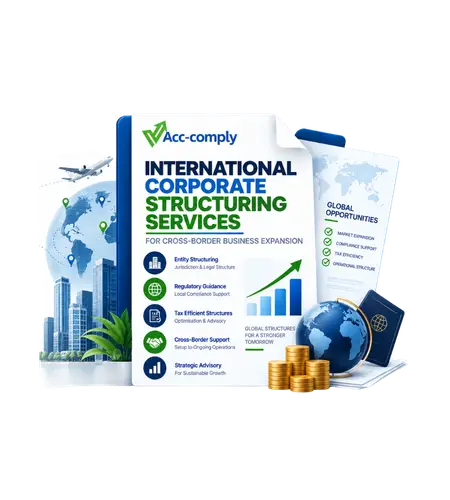
International corporate structuring banner featuring a globe and global business documents

What Is International Corporate Structuring?

International corporate structuring involves designing an appropriate business, ownership and entity arrangement for operations, investments or transactions across multiple countries.

The objective is to create a structure that supports the company’s commercial goals while considering corporate, tax, foreign-exchange, regulatory and compliance requirements. Depending on the business model, this may involve an Indian parent company, overseas subsidiary, foreign holding company, Indian subsidiary, branch or another permitted entity arrangement.

For an Indian company expanding overseas, the structure may need to consider the target jurisdiction, ownership, funding, investment route, business activity, repatriation, reporting and applicable overseas investment requirements.

For a foreign business entering India, the analysis may involve the proposed Indian entity, investment structure, funding, ownership and applicable Indian regulatory and tax considerations.

The appropriate structure depends on the facts of the business and the jurisdictions involved. Evaluating these factors before incorporation or investment can help identify important requirements and structural considerations at an early stage.

Our International Corporate Structuring Services

01

International Business and Entity Structuring

Businesses operating across multiple jurisdictions may need to determine how their international activities should be organised.

We assess parent and subsidiary relationships, ownership, capital requirements, commercial objectives, management arrangements and cross-border transaction flows.

The objective is to develop a structure that reflects the business's commercial requirements while considering relevant tax, regulatory and compliance implications.

02

Overseas Subsidiary and Entity Setup Advisory

Indian companies establishing an overseas presence may consider a foreign subsidiary or another permitted entity depending on their proposed business activities.

Our advisory covers jurisdiction selection, ownership arrangements, capital and funding requirements, parent-subsidiary relationships and foreign-exchange considerations.

Where necessary, we coordinate with incorporation and compliance professionals in the destination jurisdiction.

03

India Outbound Investment Structuring

Indian businesses investing or expanding outside India may require an assessment of their proposed investment structure and the applicable regulatory requirements.

We assist with overseas subsidiaries, foreign investments, overseas acquisitions, international holding arrangements, funding structures, ownership and control considerations.

The assessment considers relevant Overseas Direct Investment (ODI), FEMA, foreign-exchange, reporting and ongoing compliance requirements based on the transaction.

04

India Inbound Investment Structuring

Foreign companies and investors entering India may need to evaluate how their Indian operations should be organised.

We assess Indian subsidiary structures, foreign investment routes, ownership arrangements, funding mechanisms, proposed business activities and sector-specific considerations.

The objective is to align the proposed Indian presence with commercial requirements while considering applicable FDI, corporate, tax and regulatory obligations.

05

International Holding Company Structures

An international holding company may form part of a group structure involving multiple operating entities, subsidiaries or investments.

Our assessment considers ownership and control, holding company jurisdiction, subsidiary locations, dividend and funding flows, tax treaty considerations and transfer pricing.

We also consider substance, management arrangements, repatriation and compliance requirements, with the structure evaluated against genuine commercial objectives and applicable law.

06

Cross-Border Transaction and Restructuring Advisory

International groups may need to modify their corporate structure when entering new markets, acquiring businesses or reorganising ownership.

We assess group reorganisations, subsidiary restructuring, business transfers, capital restructuring, inter-company arrangements and changes to international holding structures.

Proposed changes are evaluated for corporate, tax, regulatory, foreign-exchange and compliance implications before implementation.

07

International Tax and Regulatory Considerations

International business structures can create tax and regulatory implications across multiple jurisdictions.

Depending on the transaction, we consider international tax planning, transfer pricing, Double Taxation Avoidance Agreements (DTAAs), Permanent Establishment (PE), Place of Effective Management (POEM), ODI and FDI.

The assessment also considers relevant foreign-exchange requirements, cross-border reporting and ongoing compliance based on the actual business structure, management arrangements and jurisdictions involved.

Our International Corporate Structuring Process

A structured approach helps businesses evaluate international expansion options, assess relevant considerations and plan implementation across jurisdictions.

01

Understand the
Business Objective

02

Review the
Proposed Structure

03

Identify Structuring
Considerations

04

Evaluate Structuring
Alternatives

05

Develop the
Recommended Structure

06

Support
Implementation

07

Consider Ongoing
Compliance

01

Understand the Business Objective

We begin by understanding why the business is considering international expansion, investment, restructuring or entry into a new market.

This may include reviewing the target market, proposed activities, investment size, ownership objectives, operating model and expected business flows.

02

Review the Proposed Structure

The existing or proposed group structure is reviewed to understand the relationship between Indian and foreign entities.

Where applicable, this includes reviewing parent companies, subsidiaries, holding entities, investors and proposed cross-border transaction flows.

03

Identify Structuring Considerations

Relevant corporate, tax, regulatory and foreign-exchange considerations are identified based on the proposed transaction and business requirements.

Depending on the circumstances, this may include ODI, FDI, FEMA, transfer pricing, tax treaties, Permanent Establishment (PE), Place of Effective Management (POEM) and jurisdiction-specific requirements.

04

Evaluate Structuring Alternatives

Potential structural approaches are evaluated against the business objective to identify options suited to the proposed international activities.

The assessment can consider ownership, funding, operational requirements, compliance responsibilities, tax considerations and practical implementation needs.

05

Develop the Recommended Structure

Based on the agreed scope, the preferred structure is documented along with the key considerations, dependencies and requirements.

The recommendation is developed around the business's commercial objectives and applicable regulatory environment rather than applying the same structure to every business.

06

Support Implementation

Once the structure is agreed, implementation requirements can be coordinated according to the scope of the engagement.

This may involve entity setup support, documentation requirements, regulatory considerations and coordination with relevant professionals or service providers.

07

Consider Ongoing Compliance

International structures require continued attention after implementation, particularly when business activities or group arrangements change.

Depending on the arrangement, ongoing considerations may include regulatory reporting, foreign-exchange compliance, transfer pricing, tax filings, corporate compliance and changes in cross-border transactions.

Who Can Benefit From International Corporate Structuring?

International corporate structuring can help businesses evaluate their ownership, operational, investment and organisational structures when expanding across borders or reviewing existing international arrangements.

This service can be relevant to businesses in the following situations:

01

Businesses Expanding Internationally

Indian businesses planning to enter overseas markets and establish an appropriate structure for international operations.

02

Companies Establishing Overseas Subsidiaries

Businesses considering a foreign subsidiary to manage overseas operations, investments or market expansion.

03

Businesses Setting Up Foreign Entities

Companies planning to establish a foreign holding company, operating entity or other overseas corporate structure.

04

Foreign Businesses Entering India

International businesses evaluating their entry into India, including suitable ownership and operating arrangements.

05

Companies Receiving Foreign Investment

Indian businesses considering foreign investment and the implications for ownership, governance and corporate structure.

06

Businesses Planning Overseas Investments

Indian companies evaluating overseas investments, foreign ownership arrangements and related structural considerations.

07

Companies Acquiring International Businesses

Businesses exploring overseas acquisitions, ownership changes or the integration of international operations.

08

Multinational Groups Undergoing Restructuring

Existing multinational groups reviewing their entity structure, ownership arrangements or allocation of business activities.

09

Businesses Undertaking Cross-Border Transactions

Companies assessing structural considerations arising from international transactions, investments or business arrangements.

10

Businesses Developing International Supply Structures

Companies organising international supply chains, operating entities and business flows across multiple jurisdictions.

11

Businesses Considering a Holding Company

Promoters and companies evaluating an international holding structure for investments, subsidiaries or group ownership.

12

Companies Reviewing Existing Cross-Border Structures

Businesses assessing their current international arrangements against commercial objectives and relevant legal, tax and regulatory considerations.

Who Should Consider This Service?

International corporate structuring may be relevant to the following professionals and decision-makers involved in international expansion and corporate restructuring.

Promoters CEOs Managing Directors CFOs Finance Directors Finance Teams Investors Business Decision-Makers

The appropriate structure depends on the business objectives, jurisdictions involved, ownership arrangements and applicable legal, tax, regulatory and foreign-exchange considerations.

Areas We Cover

Our international corporate structuring advisory focuses on evaluating entity relationships, ownership arrangements, investment structures and cross-border business considerations.

Key areas include:

01

International Entity Structuring

Assessment of parent, subsidiary, holding and operating entity relationships based on the proposed business model.

02

Overseas Company Setup

Advisory considerations for Indian businesses planning to establish an entity outside India.

03

Foreign Subsidiary Structure

Evaluation of ownership, funding, control and operational relationships between an Indian parent and overseas subsidiary.

04

Inbound Investment

Structuring considerations for foreign businesses and investors entering India.

05

Outbound Investment

Assessment of investment structures for Indian businesses establishing or investing in overseas entities.

06

Cross-Border Investment Structuring

Review of ownership, funding and transaction arrangements for international investments.

07

International Holding Structures

Assessment of holding-company arrangements, subsidiary relationships and related commercial and regulatory considerations.

08

International Tax Considerations

Review of relevant areas such as transfer pricing, tax treaties, DTAA, Permanent Establishment (PE) and Place of Effective Management (POEM), depending on the structure.

09

FEMA and Foreign-Exchange Considerations

Assessment of applicable foreign-exchange and overseas-investment considerations based on the nature of the transaction.

10

Cross-Border Restructuring

Advisory support for changes to existing international ownership, entity or transaction structures.

The scope of advisory support depends on the proposed business model, jurisdictions involved, transaction characteristics and applicable legal, tax, regulatory and foreign-exchange requirements.

What You Receive

The specific deliverables depend on the agreed scope and complexity of the international corporate structuring engagement.

Depending on the requirement, the engagement may include:

Review of Overseas Investment Information

Review of Relevant Overseas Entity Details

Review of Financial and Investment Information

Annual Performance Report Preparation

FEMA APR Filing Support

ODI Reporting Support

Filing and Documentation Support

Compliance-Related Review and Follow-Up

The objective is to provide a structured reporting process rather than simply preparing a form.

Benefits of Professional APR Filing Services

Professional APR filing support can help businesses manage overseas investment reporting through a more structured and organised process.

Structured Compliance Process

A defined process helps businesses organise overseas investment information and approach annual reporting systematically.

Better Documentation

Reviewing and organising relevant information creates a clearer documentation trail for the reporting exercise.

Reduced Administrative Burden

Finance and compliance teams can receive dedicated support for collecting, reviewing and organising the information required for APR reporting.

Improved Reporting Accuracy

A structured review of investment and financial information can help identify inconsistencies or missing information before the applicable filing process.

Ongoing ODI Compliance Support

For businesses with continuing overseas investments, professional support can help establish a more consistent approach to annual compliance reporting.

Why Choose Our APR Filing Services?

APR reporting requires attention to overseas investment information, financial details and applicable FEMA/RBI reporting requirements. Our service approach is built around structured information collection, review, preparation and filing support.

Professional & Compliance-Focused Approach

We focus on the reporting requirement and the information needed to complete the process appropriately.

Structured Documentation

Relevant information and documentation are organised systematically to support the APR preparation and filing process.

Practical Support

Instead of providing only theoretical guidance, our approach focuses on the actual information review, preparation and applicable filing requirements.

Support for Different Overseas Structures

Our service can support businesses with foreign subsidiaries, WOS structures, overseas joint ventures and other applicable overseas investment arrangements.

Timely Execution

A defined process helps move the engagement from information collection through review, preparation and filing support in an organised manner.

Organised Compliance Support

Our structured approach helps businesses maintain a clearer process for recurring APR and overseas investment compliance requirements.

International Corporate Structuring for Businesses in India

Indian companies may consider international structures when entering overseas markets, establishing subsidiaries, making foreign investments or developing multinational operating models.

For businesses based in India, international structuring may require consideration of both the commercial objective and India's regulatory framework. Depending on the transaction, this can include overseas investment requirements, FEMA considerations, tax implications, transfer pricing and reporting obligations.

For foreign businesses entering India, the focus may shift toward Indian entity structures, investment routes, ownership, tax and regulatory requirements.

The appropriate structure depends on the specific facts and jurisdictions involved. V Acc-comply can assist businesses in evaluating these considerations before proceeding with an international expansion, investment or restructuring plan.

Frequently Asked Questions

What is international corporate structuring?

International corporate structuring is the process of designing an appropriate business and entity arrangement for activities, investments or transactions involving more than one country. It can consider ownership, subsidiaries, holding companies, funding, taxation, foreign-exchange requirements and regulatory compliance.

Why do Indian companies need international corporate structuring before expanding overseas?

An overseas expansion may involve entity formation, investment, funding, ownership, taxation, foreign-exchange and reporting considerations. Reviewing these elements before implementation can help the business evaluate its options and identify relevant requirements.

Can you help with overseas company setup from India?

Yes. Advisory support can cover the structuring considerations associated with overseas entity setup, including the proposed entity relationship, investment structure, funding, regulatory considerations and ongoing compliance requirements. The exact scope depends on the destination jurisdiction and proposed business activity.

What is the difference between inbound and outbound structuring?

Outbound structuring generally relates to Indian businesses investing in or establishing operations outside India.

Inbound structuring relates to foreign businesses or investors establishing or investing in India.

Each may involve different ownership, regulatory, foreign-exchange and tax considerations.

Does international structuring include ODI and FEMA considerations?

Where applicable, the engagement can consider ODI and FEMA-related requirements for Indian businesses undertaking overseas investments. The specific requirements depend on the investor, transaction, overseas entity and applicable regulations.

Should tax considerations be reviewed when creating an international holding company?

Yes. An international holding structure should be evaluated together with relevant tax and commercial considerations. Depending on the structure, this can include:

  • Tax treaties
  • Transfer pricing
  • Dividend and funding flows
  • Permanent Establishment (PE)
  • Place of Effective Management (POEM)
  • Applicable reporting requirements
What information is required to assess an international business structure?

The information required depends on the engagement. It may include:

  • Existing group structure
  • Proposed countries
  • Business activities
  • Ownership
  • Investment amount
  • Funding model
  • Expected transactions
  • Management arrangements
  • Intended commercial objective
Can an existing international structure be reviewed or restructured?

Yes. Existing international structures can be assessed when a business is entering new markets, changing ownership, acquiring another entity, modifying transaction flows or reorganising its group structure.

Need Professional International Corporate Structuring Support?

International expansion becomes easier to evaluate when the business structure, investment route, tax considerations and regulatory requirements are considered together.

Whether you are an Indian company planning overseas expansion, establishing a foreign subsidiary, entering India as an investor or reviewing an existing international structure, the right advisory approach can help identify the key considerations before implementation.

Discuss your proposed international expansion, investment or restructuring requirement and identify the areas that need to be evaluated.

Tell Us Your Requirement ›