ICFR Services
Strengthen the controls that support accurate and reliable financial reporting.
Our ICFR Services help organizations assess financial reporting risks, review control design,
test operating effectiveness, document processes and identify areas requiring corrective action.
The engagement can cover entity-level and process-level controls based on the organization’s requirements.
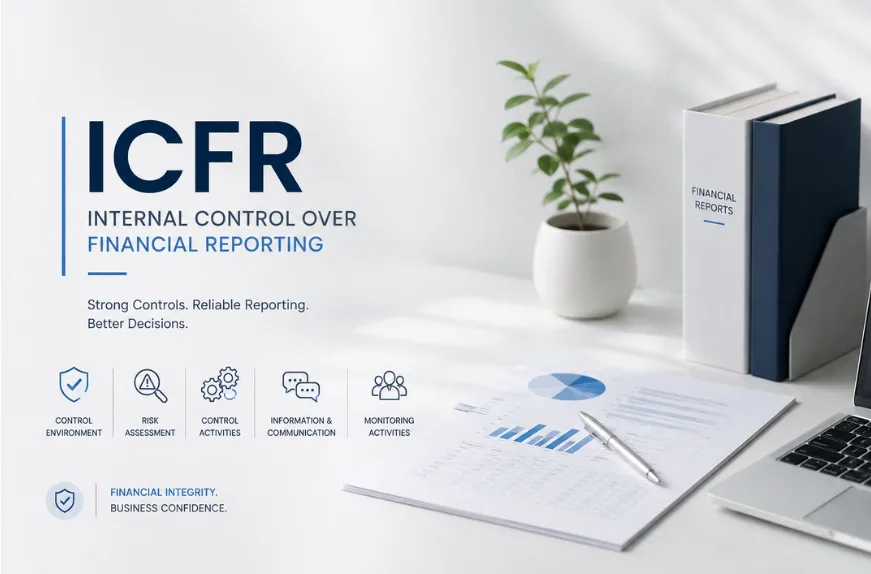
What Are ICFR Services ?
Internal Controls over Financial Reporting (ICFR) are controls designed to support the reliability of an organization’s financial reporting processes. Weak or poorly documented controls can make it difficult to identify financial reporting risks, demonstrate how key controls operate or address control deficiencies effectively.
Our ICFR Services focus on evaluating the control environment around financial reporting. This includes understanding relevant processes, identifying risks, reviewing control design, testing controls and documenting observations.
The objective is to give management a clearer view of how financial reporting controls operate and where improvements may be required.
The scope can include financial reporting controls, entity-level controls, process-level controls, risk assessment, control documentation and remediation of identified deficiencies.
Our ICFR Services
We help organisations strengthen internal controls over financial reporting through structured risk assessment, control evaluation, documentation and testing.
ICFR Risk Assessment
We assess risks that may affect the reliability of financial reporting and consider the controls established to address those risks.
The assessment helps identify areas where controls may require further review, documentation or improvement. It provides a basis for determining the appropriate scope of control evaluation and testing.
Control Design and Effectiveness Review
A control needs to be appropriately designed to address the risk it is intended to manage.
We review relevant controls to understand whether their design addresses the identified financial reporting risks. Where applicable, the review also considers how controls operate in practice and whether evidence is available to demonstrate their operation.
The review can help management identify gaps between documented control procedures and actual processes.
Control Documentation and Process Mapping
Clear documentation helps management understand how financial processes operate and where controls are positioned within those processes.
Our work can include documenting relevant processes, control activities, responsibilities and key points of control. Documentation may be used to support control evaluation, testing and future reviews.
Control Testing
Control testing provides evidence about whether identified controls are operating as intended.
Testing may involve reviewing relevant documentation, transactions, approvals, reconciliations or other available evidence, depending on the nature of the control.
The testing approach is aligned with the control and the financial reporting risk being addressed.
Risk and Control Matrix
A Risk and Control Matrix (RCM) connects identified risks with the controls established to address them.
We help organize relevant information such as:
- Financial reporting risks
- Control objectives
- Control activities
- Control owners
- Frequency of controls
- Control evidence
- Testing considerations
- Identified deficiencies
A structured RCM can make it easier to understand the relationship between risks and controls across relevant processes.
Control Deficiency Assessment and Remediation
Control reviews may identify gaps in control design, documentation or operation.
We assess identified deficiencies and help define practical corrective actions based on the nature of the issue. Remediation may involve improving documentation, clarifying responsibilities, strengthening control procedures or addressing gaps identified during testing.
The focus is on helping management establish a clearer path from identified deficiency to corrective action.
Our ICFR Process
Initial Consultation
& Scope Definition
Risk & Process
Assessment
Control Review &
Documentation
Control
Testing
Findings &
Remediation
Final
Review
ICFR Risk Assessment
We assess risks that may affect the reliability of financial reporting and consider the controls established to address those risks.
The assessment helps identify areas where controls may require further review, documentation or improvement. It provides a basis for determining the appropriate scope of control evaluation and testing.
Control Design and Effectiveness Review
A control needs to be appropriately designed to address the risk it is intended to manage.
We review relevant controls to understand whether their design addresses the identified financial reporting risks. Where applicable, the review also considers how controls operate in practice and whether evidence is available to demonstrate their operation.
The review can help management identify gaps between documented control procedures and actual processes.
Control Documentation and Process Mapping
Clear documentation helps management understand how financial processes operate and where controls are positioned within those processes.
Our work can include documenting relevant processes, control activities, responsibilities and key points of control. Documentation may be used to support control evaluation, testing and future reviews.
Control Testing
Control testing provides evidence about whether identified controls are operating as intended.
Testing may involve reviewing relevant documentation, transactions, approvals, reconciliations or other available evidence, depending on the nature of the control.
The testing approach is aligned with the control and the financial reporting risk being addressed.
Risk and Control Matrix
A Risk and Control Matrix (RCM) connects identified risks with the controls established to address them.
We help organize relevant information such as:
- Financial reporting risks
- Control objectives
- Control activities
- Control owners
- Frequency of controls
- Control evidence
- Testing considerations
- Identified deficiencies
A structured RCM can make it easier to understand the relationship between risks and controls across relevant processes.
Control Deficiency Assessment and Remediation
Control reviews may identify gaps in control design, documentation or operation.
We assess identified deficiencies and help define practical corrective actions based on the nature of the issue. Remediation may involve improving documentation, clarifying responsibilities, strengthening control procedures or addressing gaps identified during testing.
The focus is on helping management establish a clearer path from identified deficiency to corrective action.
Our ICFR Services
We help organisations strengthen internal controls over financial reporting through structured risk assessment, control evaluation, documentation and testing.
ICFR Risk Assessment
We assess risks that may affect the reliability of financial reporting and consider the controls established to address those risks.
The assessment helps identify areas where controls may require further review, documentation or improvement. It provides a basis for determining the appropriate scope of control evaluation and testing.
Control Design and Effectiveness Review
A control needs to be appropriately designed to address the risk it is intended to manage.
We review relevant controls to understand whether their design addresses the identified financial reporting risks. Where applicable, the review also considers how controls operate in practice and whether evidence is available to demonstrate their operation.
The review can help management identify gaps between documented control procedures and actual processes.
Control Documentation and Process Mapping
Clear documentation helps management understand how financial processes operate and where controls are positioned within those processes.
Our work can include documenting relevant processes, control activities, responsibilities and key points of control. Documentation may be used to support control evaluation, testing and future reviews.
Control Testing
Control testing provides evidence about whether identified controls are operating as intended.
Testing may involve reviewing relevant documentation, transactions, approvals, reconciliations or other available evidence, depending on the nature of the control.
The testing approach is aligned with the control and the financial reporting risk being addressed.
Risk and Control Matrix
A Risk and Control Matrix (RCM) connects identified risks with the controls established to address them.
We help organize relevant information such as:
- Financial reporting risks
- Control objectives
- Control activities
- Control owners
- Frequency of controls
- Control evidence
- Testing considerations
- Identified deficiencies
A structured RCM can make it easier to understand the relationship between risks and controls across relevant processes.
Control Deficiency Assessment and Remediation
Control reviews may identify gaps in control design, documentation or operation.
We assess identified deficiencies and help define practical corrective actions based on the nature of the issue. Remediation may involve improving documentation, clarifying responsibilities, strengthening control procedures or addressing gaps identified during testing.
The focus is on helping management establish a clearer path from identified deficiency to corrective action.
What You Receive
The outputs of an ICFR engagement depend on the agreed scope and areas reviewed. Relevant deliverables may include:
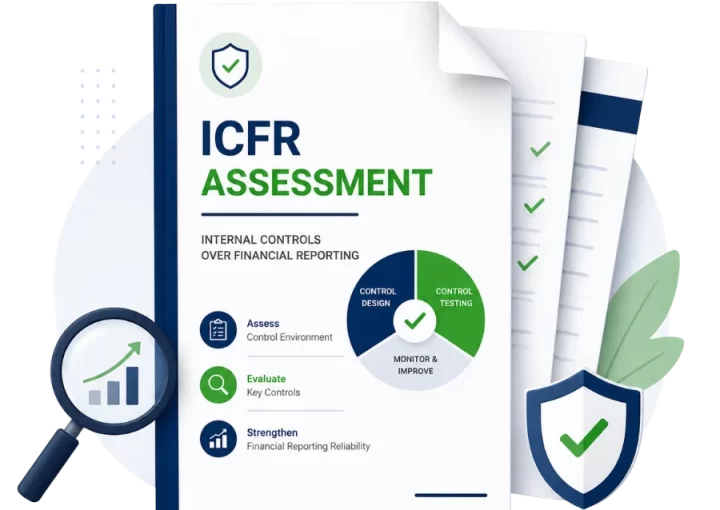
ICFR Assessment Findings
Control Review Observations
Process and Control Documentation
Risk and Control Matrix
Control Testing Results
Identified Control Deficiencies
Deficiency Assessment
Remediation Recommendations
Corrective Action Considerations
Final Review Observations
Deliverables should be aligned with the actual scope of work agreed for the engagement.
Benefits of ICFR Services
A structured ICFR review can help organizations develop a clearer understanding of their financial reporting control environment.
Identify Financial Reporting Risks
Reviewing risks and corresponding controls can help management identify areas that require greater attention.
Improve Control Visibility
Documenting processes and controls provides greater visibility into how financial reporting controls operate and who is responsible for them.
Identify Control Gaps
Control evaluation and testing can highlight areas where design, operation or documentation may require improvement.
Support Remediation
A documented assessment of deficiencies can help management prioritize corrective actions.
Strengthen Governance
Clearer control responsibilities and documentation can support internal control oversight and corporate governance processes.
Improve Audit Readiness
Organized control documentation, testing evidence and remediation records can help management prepare for relevant reviews and discussions.
ICFR Services in Chennai and India
Organizations in Chennai and across India can use ICFR Services to assess and strengthen controls supporting
their financial reporting processes.
The scope can be tailored to the organization’s processes, reporting requirements and control environment.
This may include reviewing financial reporting risks, documenting relevant controls,
assessing control design,testing controls and identifying areas requiring remediation.
For organizations operating across multiple functions or locations, the assessment can also help
establish a clearer view of how relevant controls are documented and applied.
The appropriate scope, methodology and deliverables should be confirmed based on the organization’s
requirements.
Frequently Asked Questions
What does an ICFR review cover?
The scope can include the control environment, entity-level controls, process-level controls, financial reporting risks, control design, documentation, testing, Risk and Control Matrix development or review, deficiency assessment and remediation.
What is a Risk and Control Matrix?
A Risk and Control Matrix, or RCM, connects identified risks with the controls established to address those risks. It can document information such as control objectives, control activities, owners, frequency, evidence and testing considerations.
What information is required for an ICFR engagement?
The information required depends on the agreed scope. Relevant process documentation, control information, financial reporting process details and available control evidence may be required for the assessment and testing.
How are control deficiencies addressed?
Identified deficiencies are assessed based on their nature and impact within the reviewed control environment. Corrective actions may involve improving control procedures, documentation, responsibilities or other areas identified during the assessment.
Are ICFR Services available in Chennai?
ICFR Services can be provided to organizations in Chennai and across India, subject to the service scope and engagement requirements. The specific areas covered should be confirmed based on the organization's needs.
Need ICFR Support
A structured review of internal controls can help management identify financial reporting risks,
understand control gaps and establish practical remediation actions.
Speak with us about your ICFR requirements and discuss the appropriate scope for your organization.